
On Fiction as Social Commentary
Intro
Recently, I read a book that got me thinking about how we use fiction to make social commentary. Generally, fiction is a great way to start conversations on social issues. It provides a distance that makes it easier to talk about systemic violence and discrimination happening to people around us, or that we ourselves are experiencing. It can also help us reckon with any guilt we may feel about our role in upholding these systems, but social commentary is hard to do well, which is what I want to talk about today. There are three main issues I frequently see in fiction addressing social issues.
1. Ohhh, there’s the message

Jess and Jules both have a crush on their coach in Bend It Like Beckham (Source: ScreenRant).
I can’t share too many details about the book that inspired this post because it’s an advanced reader copy (ARC), but I imagine most people have seen or read something with similar dynamics. One of the novel’s primary themes is how women are encouraged to dislike each other and form adversarial relationships. Our main character (we’ll call her Jess) and another woman (Alex) find themselves competing over a man. It’s in first-person, so our view of Alex is filtered through Jess’s eyes. And since Jess doesn’t like Alex, all of her actions are construed in the worst possible light. The man they want doesn’t receive this treatment, though he certainly deserves it.
Competition between women, especially over a man, is a common media trope, and many works don’t do anything to counter its negative elements (e.g. demonizing women, centering men in women’s lives, etc.). This novel doesn’t want to justify Jess’ hatred of Alex, so in the denouement, another character tells her that society makes it easy to hate women – in fact, it’s encouraged. Sometimes, we find ourselves assuming the worst and hating women for no legitimate reason. After hearing this, Jess reflects and starts to see that Alex may not be as terrible as she believed.
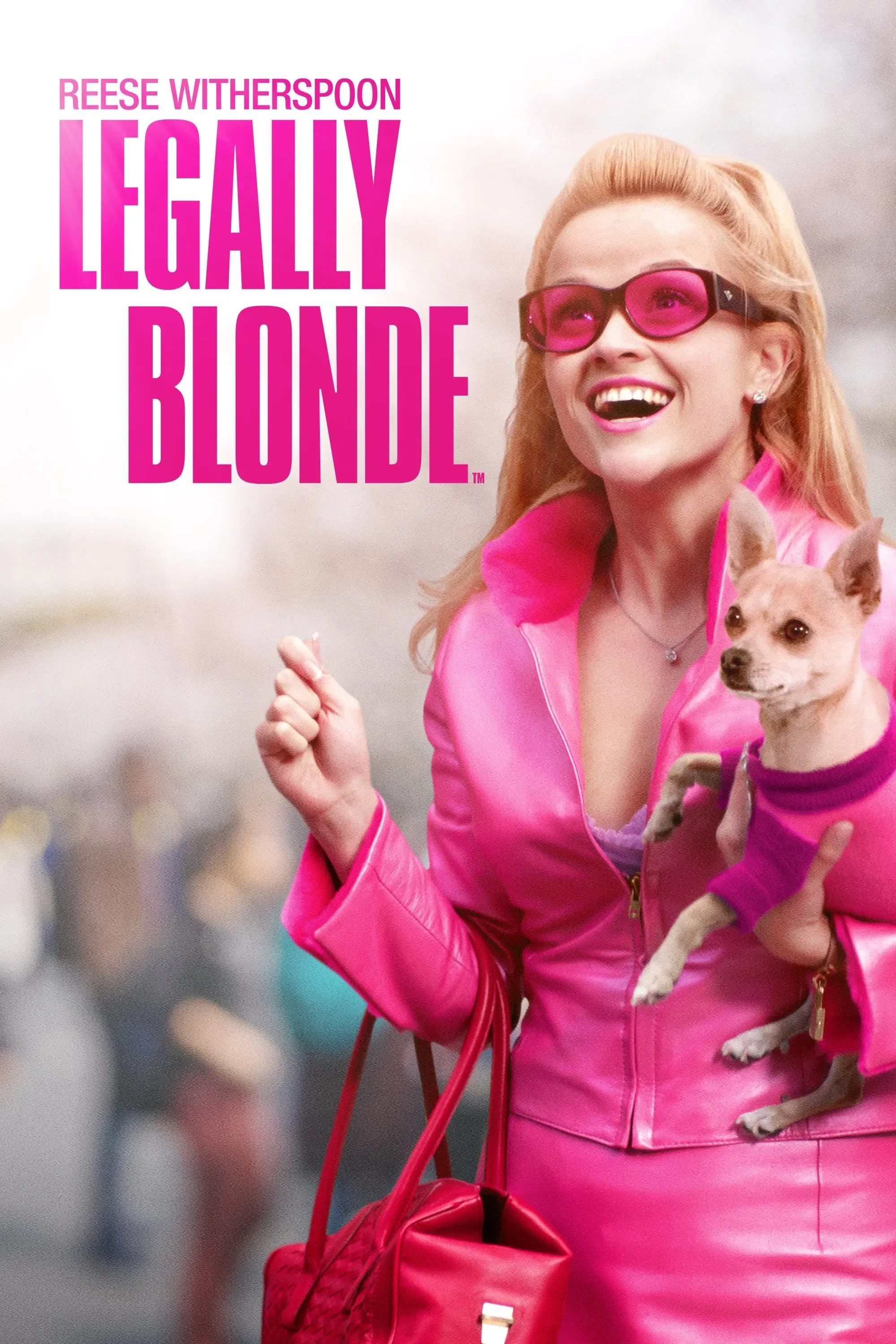
Legally Blonde takes a different approach to women as rivals (Source: MovieWeb).
I understand the point the author was seemingly trying to make: patriarchal societies deem women with particular interests and characteristics unlikable, vapid, and vain; we make assumptions and often hold onto them, even as we get to know someone. But in practice, the novel has one woman consistently denigrating another woman’s style, personality, morality, and interests. It may be easier to swallow because Alex is a beautiful woman with a high-paying job who enjoys minimalism, millennial grey, clean eating, and yoga. She’s blunt and frequently inconsiderate. In short, she’s a popular woman to hate, which felt intentional. Readers are likely familiar with the archetype the author is drawing on and might develop their own assumptions about Alex, independent of Jess’ bias, but it would be a stronger critique if we saw changes in how Jess thought of and interacted with Alex once she started seeing her more clearly.
Towards the end of their time together, we get some indication that Jess may be wrong about Alex, but it’s hard to put stock in that when Alex says and does several actively harmful things over the course of the story, including blatant ableism and classism. So despite Jess’ reflection, readers have little reason to change their opinion of Alex, and we never see her again. There’s no opportunity to see if/how their interactions change when Jess realizes she’s misjudged Alex. While being told we make assumptions about women and dislike them without reason, we see Jess realizing she was wrong to think of Alex so poorly but never reckon with Alex’s actual offenses.
The side characters also offset the intended message. Besides Alex and Jess, three other women feature prominently in the story, and two of them also fall into this trope. They either engage in similar competition and jealousy over the same man or encourage this dynamic. It makes the theme feel even more based in dialogue rather than the narrative itself.
2. Whoops, it’s discrimination 2.0
Divergent series spoilers
Next is a common mistake in dystopian fiction. Generally, dystopian stories show how discrimination and homogeneity lead to unhealthy societies. The overall message is that diversity and equity are good, but in trying to demonstrate this, they sometimes give credence to the bias that exists in society. The Divergent series by Veronica Roth is one example of this.
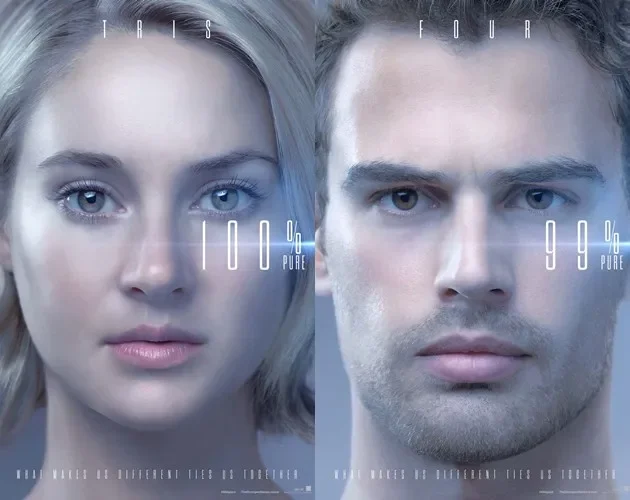
Tris is divergent because her genes are 100% pure. At 99% purity, Four is genetically damaged (Source: WowKeren).
The first book, Divergent, focuses on the importance of personal choice. Everyone chooses a faction to join based on the thing they value most – selflessness, intelligence, bravery, peace, or honesty. There’s a test that tells you which faction you’re most aligned with, but ultimately, the choice is yours. The main character, Tris, feels pressure to stay in her home faction but chooses another, and the message is clear. People might expect certain things of you; there may be unexpected consequences, but the choice is yours. You can live for yourself.
Book three, Allegiant, pulverizes this idea. We learn that, in the past, researchers found the genes responsible for (so-called) undesirable characteristics and removed them from the population. Eventually, they realized eugenics isn’t good for society, and it led to a civil war. Tris’ city is one of many experiments formed after the war’s end. The government started these experiments to help people with “damaged” (i.e. altered) genes live peacefully until enough people with “pure” genes were born. Choosing your faction gives the illusion of self-determination, but the test’s suggestion isn’t based on predispositions. In fact, it isn’t a suggestion at all. The test tells you who you really are. Those who are divergent (i.e. don’t fit into one faction) are genetically pure, but for everyone else, their damaged genes make them more cowardly or violent, less intelligent or honest or kind. Eugenics worked. They successfully determined people’s values, personalities, and choices by altering their genes. It just didn’t have the effect they wanted.

Logo for the Bureau of Genetic Welfare (Source: Redbubble)
The series does ultimately support diversity. It says we shouldn’t hide away in echo chambers, only engaging with people who have the exact same values and beliefs as ourselves. It says we need to be well rounded. These are great messages I agree with, but we don’t need a canon murder gene to get there. We should disagree with eugenics because it’s a form of genocide, but Divergent says we should disagree with eugenics because, while it may be effective, it doesn’t actually improve society. We started with the value of choice and ended with, “Yeah, their genes are damaged, and they’re less capable of morality and empathy than people with pure genes. But, that doesn’t mean we should kill them.”
Damaged genes didn’t need to be a real thing that make people inherently worse, but they are. Not to mention the book ending with Tris and company deciding the only way to deal with the people running the experiment is to erase their memories, something they already agreed was akin to murder, but they can’t imagine another way to help them work through their biases. What message are we meant to take from this, especially as we recognize our own biased thinking?
If you haven’t read the series or just want to know the specifics, shitty book club on YouTube has a Divergent video that talks about these issues while going through the plot of all three books.
3. You shouldn’t discriminate now, but it was fine in the past
Zootopia spoilers
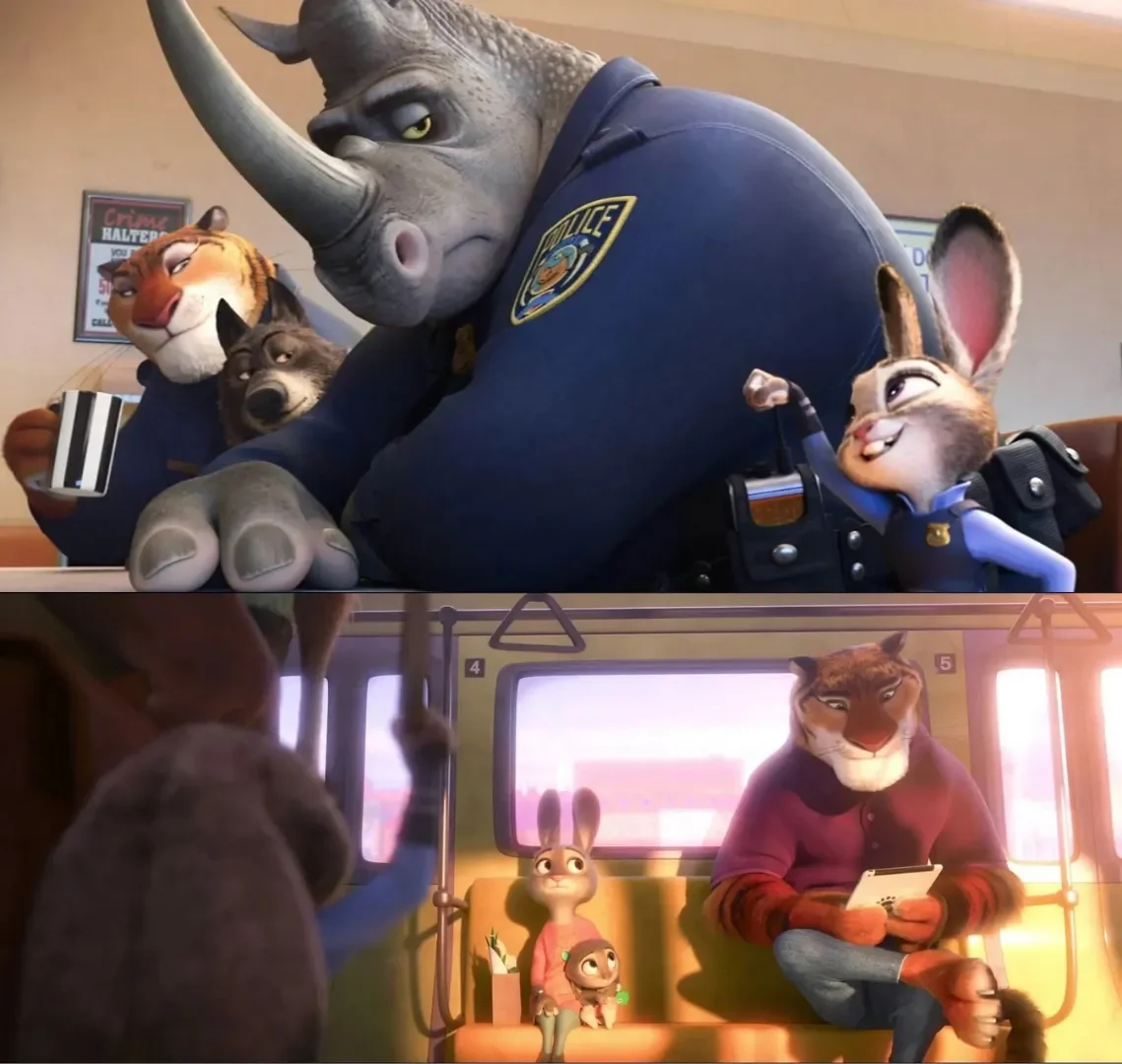
Despite living together in peace, Zootopia’s predators and prey don’t trust each other (Sources: Geeks + Gamers).
I find this usually happens when a metaphor is used to make social commentary. My example of this isn’t a novel, but it was the first thing that came to mind. Last year, I watched Zootopia, and was once again reminded that, while it’s a fun watch, it’s an incredibly clumsy attempt at social commentary. In the movie, predators and prey have evolved so all animals can live together in peace, but there are still prejudices between the two groups. In many ways, predators don’t take prey seriously. As a child, the main character – a rabbit named Judy – and other prey in her town are bullied by predators. As an adult, Judy becomes a police officer, and her colleagues (all predators) don’t think she’s smart or tough enough for the job. Many prey don’t like or trust predators. They believe all predators are inherently dangerous, that they’re one bad day from losing control of their violent tendencies.
Not long after joining the police force, Judy starts investigating predators who have “gone savage” and attacked everyone around them. Fear of predators rises quickly, and discrimination increases alongside it. Judy learns that someone is drugging predators to make them violent, taking advantage of already existing prejudices to throw the city into chaos. Through her partnership with Nick the fox, they both realize that predators and prey aren’t that different.
This message comes across fairly well on an interpersonal level, but there’s a serious problem when you zoom out. In Zootopia, predators and prey evolved to live together. In the past, both were driven by instincts that kept them alive. Things are different now, but their prejudice is based in a real past where their antagonistic relationship was not only justified but biologically determined. Predators grew stronger, etc. to catch and eat prey. Prey evolved to live in packs, etc. to survive. The differences, and the danger, were real.
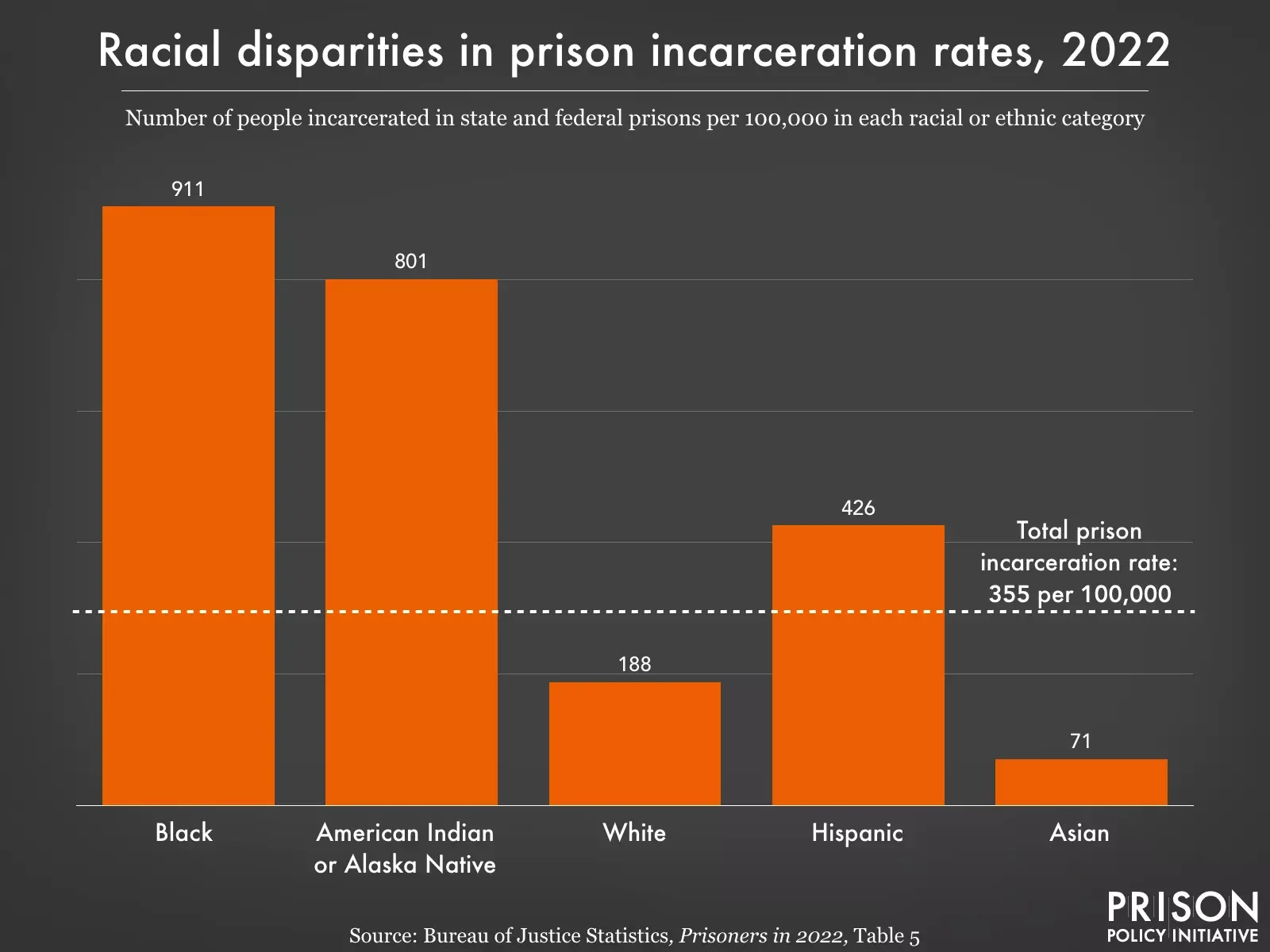
A bar chart showing the racial disparities in state and federal prison incarceration rates in 2022 (Source: Prison Policy Initiative).
In reality, there is no people group that is inherently violent, and since Zootopia is commenting on racism specifically, it’s incredibly racist to imply that there was a time when Black people, and other POC, were an active danger to anyone because of some biological drive. This is quite literally why Black people have always been targeted by police and are over-represented in jails and prisons in the United States. Hispanic and American Indian communities are also targets of police violence, and the damage of these myths is impossible to miss when looking at modern United States’ politics. By Zootopia’s logic, racism was okay in the past because there was a real threat, but there’s no longer any reason to fear. That’s a far cry from the message they were ostensibly trying to send.
If you’re interested in learning more about how fear has been used to justify racial violence, I highly recommend exploring the Equal Justice Initiative’s reports on racial violence and injustice from the Transatlantic Slave Trade to present-day United States.
Conclusion
I love fiction as a way to explore and discuss serious topics. It can bear meaningful conversations that help us better understand ourselves and others, introduce us to ideas in a non-threatening way, and expose us to new worldviews, but it can also lead to misconceptions and spread harmful ideas, intentionally and not. I haven’t read Divergent as an adult, but I enjoyed it as a teen. I like Zootopia and the ARC too, but they’re not perfect. It’s important to think critically about the media we engage with and, perhaps especially, with the things we like. It can be easy to miss harmful messages when you’re enjoying a book, but that doesn’t mean they don’t impact the way we see others and the world as a whole. After finishing the ARC, it took me several days to be able to articulate the ideas above, but I’m glad I took that time and can have more nuanced conversations about it after its release.
I’d love to hear others’ thoughts on using fiction to make social commentary. Do you think fiction should have a role in discussing discrimination? What books addressing social issues do you enjoy, whether they successfully make their point or not?